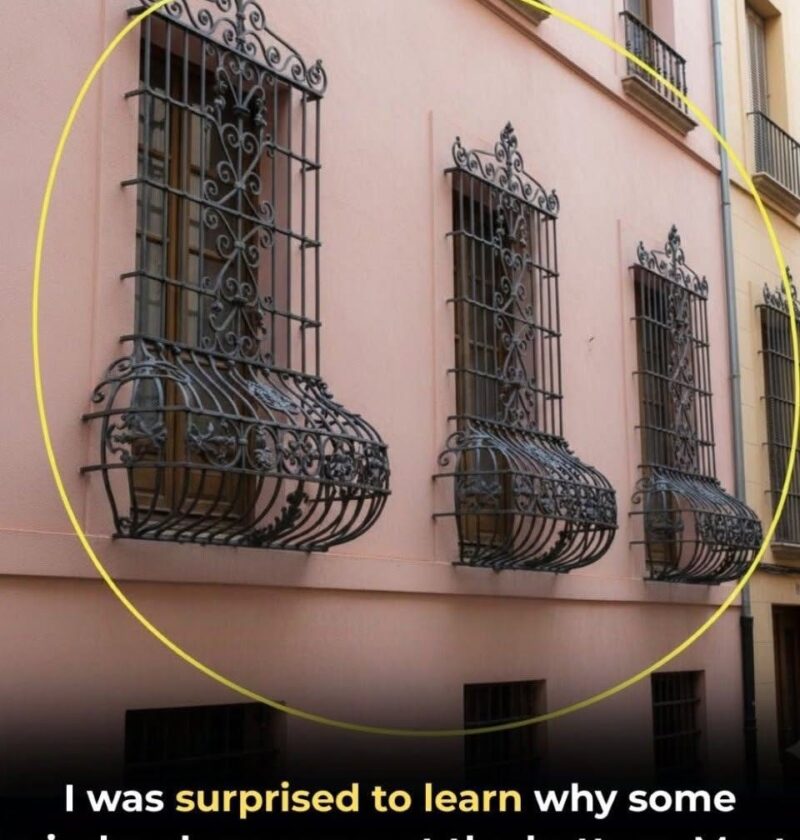
Those curved bottoms you sometimes see on window bars (often called “belly bars” or “potbelly security bars”) aren’t just decorative—they’re actually designed with a few practical purposes in mind.
1. Space for plants or objects


The outward curve creates extra room between the window and the bars. This lets people place:
- Flower pots or planter boxes
- Small decorations
- Even air-conditioning units in some cases
Without the curve, anything placed there would either not fit or get crushed against the glass.
2. Safety and usability from inside


The added space can make it easier to:
- Reach out the window
- Open and close shutters
- Potentially exit in an emergency (though proper quick-release mechanisms are still essential)
Flat bars can feel very restrictive; curved ones give a bit of breathing room.
3. Aesthetic appeal


Curved bars often look less harsh than straight, prison-like grilles. They’re common in styles like:
- Mediterranean / Spanish architecture
- Older urban neighborhoods with wrought iron details
The curve softens the look while still providing security.
4. Structural strength
The curved shape can also improve rigidity. Arched metal distributes force better than perfectly flat bars, making them slightly harder to bend or break.
In short: the curve is a smart combination of function and design—it gives you extra usable space, improves comfort and safety, and looks better than flat bars.
If you’ve got a specific building or style in mind, I can explain why they chose that exact shape.