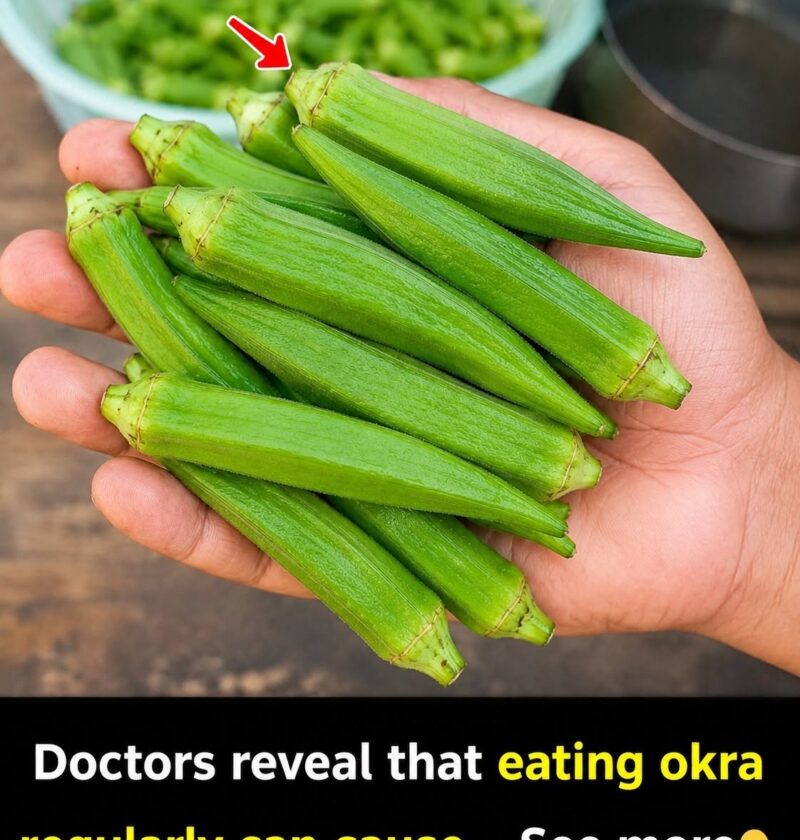
That headline is another clickbait-style tease. “Okra causes…” without finishing the sentence is designed to make you worry or click, not to inform.
Okra (okra) is generally a nutrient-rich, safe vegetable for most people.
🥗 What okra actually does in the body
It contains:
- Fiber (especially soluble fiber)
- Mucilage (gel-like substance)
- Vitamin C, folate, and antioxidants
👍 Real, evidence-based benefits
1. Supports digestion
- High fiber helps bowel regularity
- Mucilage can soothe the digestive tract
2. May help blood sugar control
- Soluble fiber can slow glucose absorption
- Sometimes studied for mild support in diabetes management (not a cure)
Related condition:
- type 2 diabetes
3. Heart health support
- Fiber may help reduce LDL cholesterol modestly
- Antioxidants support vascular health
⚠️ Possible downsides (what “doctors reveal” might refer to)
Depending on the article, it might exaggerate things like:
- Digestive gas or bloating (due to fiber)
- Kidney stone concerns (theoretical) in very high-oxalate diets (not a common issue for normal intake)
- Blood sugar lowering effect in people already on diabetes medication (can be relevant clinically)
🧠 Bottom line
- ✔️ Okra is a healthy vegetable for most people
- ✔️ Supports digestion and may help blood sugar control slightly
- ❌ It does NOT cause hidden dangerous effects in normal dietary amounts
🚩 Why headlines like this exist
They usually:
- Cut off the real conclusion to create curiosity
- Overstate minor or theoretical effects
- Use “doctor says” to sound authoritative
If you want, I can break down which viral “superfood warnings” are actually real concerns—and which ones are pure internet drama.