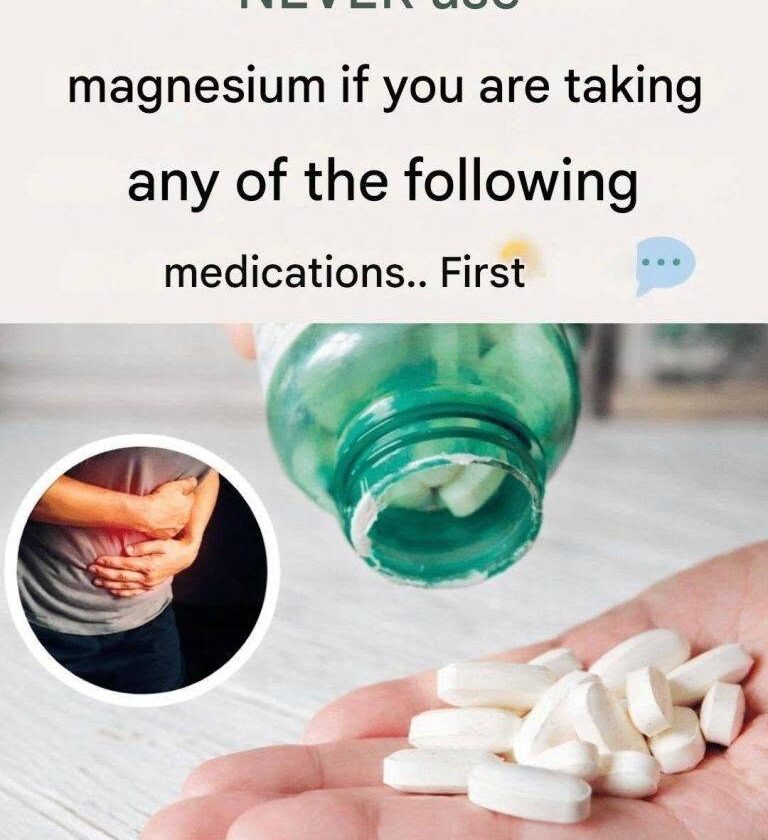
That headline is another fear-based partial claim. It usually comes from a real idea—magnesium can interact with certain medications—but it’s often exaggerated to sound like a blanket warning.
Let’s clarify it properly.
🧪 What magnesium is
Magnesium
It’s important for:
- muscle relaxation
- nerve function
- heart rhythm
- energy production
⚠️ When magnesium can interfere with medications
Magnesium mainly causes issues when it reduces absorption of certain drugs in the gut or affects electrolyte balance.
1. Some antibiotics
- Tetracyclines (e.g., doxycycline)
- Fluoroquinolones (e.g., ciprofloxacin)
👉 Magnesium can bind to them and make them less effective.
2. Thyroid medication
- Levothyroxine
👉 Magnesium can reduce absorption if taken at the same time.
3. Osteoporosis drugs
- Bisphosphonates (e.g., alendronate)
👉 Must be taken separately from magnesium.
4. Certain blood pressure or heart medications
Usually not dangerous, but spacing doses may be advised.
🧠 Important reality check
The warning “NEVER use magnesium if you take X” is misleading because:
- it’s usually about timing (separation of doses), not total avoidance
- magnesium is safe for most people when used appropriately
- problems are mostly absorption interactions, not toxicity interactions
🚨 When magnesium can be risky
Only in specific situations:
- severe kidney disease (can’t remove excess magnesium properly)
- very high supplemental doses without supervision
🧾 Bottom line
Magnesium is not something most people must avoid. The key is:
- ✔️ correct dosing
- ✔️ spacing it from certain medications
- ❌ not combining it at the same time with specific drugs
If you want, I can give you a simple “safe timing chart” showing exactly how many hours apart to take magnesium from common medications.