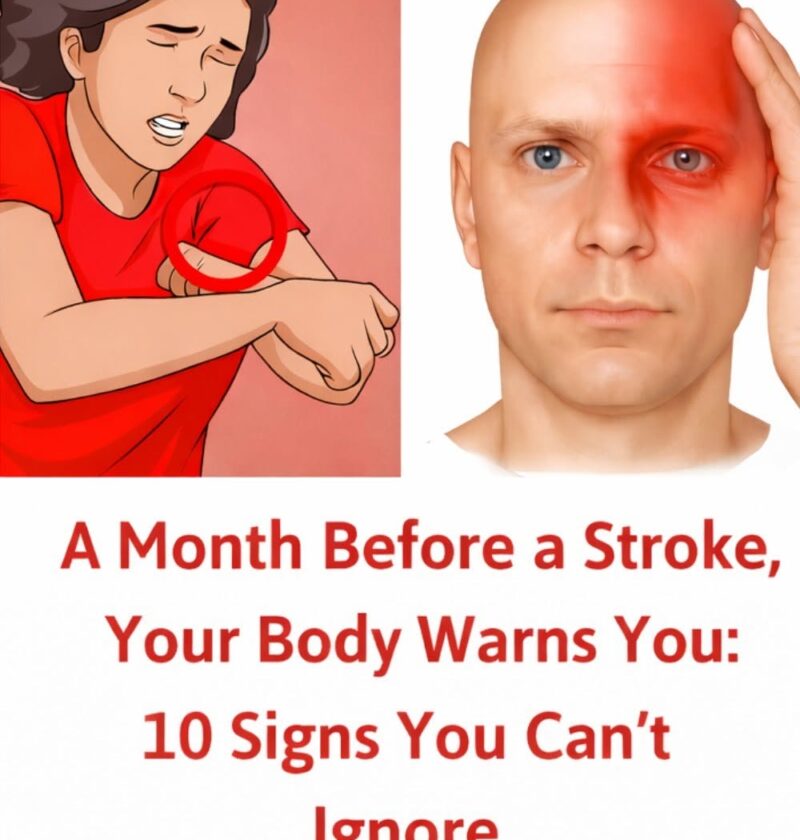
A Month Before a Stroke? 10 Warning Signs You Shouldn’t Ignore
The idea that a stroke always gives a warning a month in advance is not accurate. Some people experience warning signs days, weeks, or even months before a stroke, while others have no warning at all.
One of the most important warning events is a transient ischemic attack (TIA), sometimes called a “mini-stroke.” A TIA can produce stroke-like symptoms that go away on their own, but it is a medical emergency because it can signal a high risk of a future stroke.
Here are 10 symptoms that may indicate a stroke, TIA, or another serious condition and should not be ignored.
1. Sudden Weakness on One Side of the Body
Weakness or numbness affecting the face, arm, or leg—especially on one side—is a classic stroke warning sign.
2. Facial Drooping
One side of the face may droop or feel numb. A person’s smile may appear uneven.
3. Difficulty Speaking
Speech may become:
- Slurred
- Confused
- Difficult to understand
Some people may have trouble finding words.
4. Sudden Vision Changes
Warning signs can include:
- Blurred vision
- Double vision
- Loss of vision in one or both eyes
5. Dizziness or Loss of Balance
Sudden difficulty walking, coordination problems, or unexplained dizziness may indicate a neurological emergency.
6. Severe Headache
A sudden, severe headache—especially one unlike previous headaches—can be a warning sign of certain types of stroke.
7. Confusion
Sudden confusion, trouble understanding speech, or difficulty following conversations should be evaluated immediately.
8. Numbness or Tingling
Unexpected numbness, particularly on one side of the body, may indicate reduced blood flow to the brain.
9. Brief Episodes That Resolve
A TIA may cause symptoms that last only a few minutes or hours before disappearing.
Even if symptoms go away completely, emergency medical evaluation is still important.
10. Sudden Difficulty Swallowing
Although less common, swallowing problems can sometimes occur with neurological conditions including stroke.
Remember the FAST Test
A simple way to recognize common stroke symptoms is FAST:
- Face drooping
- Arm weakness
- Speech difficulty
- Time to call emergency services
If any of these symptoms occur suddenly, seek emergency medical care immediately.
Stroke Risk Factors
Factors that increase stroke risk include:
- High blood pressure
- Diabetes
- Smoking
- High cholesterol
- Obesity
- Physical inactivity
- Heart rhythm disorders such as Atrial Fibrillation
- Previous stroke or TIA