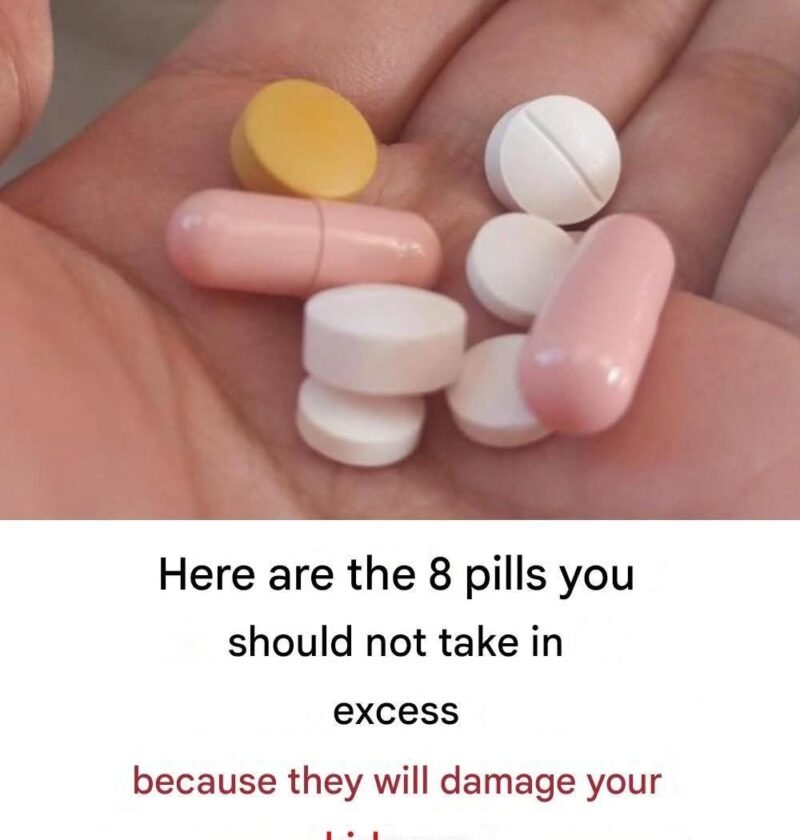
That headline is a classic fear-based list. It suggests there are “8 pills everyone should avoid,” but in reality kidney risk depends on the specific drug, dose, duration, and your health condition, not a universal banned list.
Your kidneys filter many medicines, so some drugs can stress them—especially in dehydration, older age, or existing kidney disease.
🧠 First: what “kidney damage” really means
The kidneys are resilient, but they can be affected by:
- Reduced blood flow to kidneys
- Direct drug toxicity (rare but possible)
- Long-term high-dose use
- Drug interactions or dehydration
💊 Medicines commonly linked to kidney stress (context matters)
1. Painkillers (NSAIDs)
Examples: ibuprofen, diclofenac, naproxen
- Most common group linked to kidney strain
- Risk increases with long-term or high-dose use, especially if dehydrated
2. Certain antibiotics
Examples: aminoglycosides (like gentamicin)
- Used in hospitals for serious infections
- Kidney monitoring is standard during use
3. Diuretics (“water pills”)
Examples: furosemide, hydrochlorothiazide
- Can affect fluid balance and kidney function if misused or dehydrated
4. Blood pressure medicines (ACE inhibitors / ARBs)
Examples: lisinopril, losartan
- Can slightly change kidney filtration
- Often protective long-term in diabetes and hypertension when monitored
5. Contrast dye (for scans)
Not a pill, but important
- Can temporarily affect kidney function in high-risk patients
6. Some antivirals and chemotherapy drugs
- Used in specific serious conditions
- Kidney function is closely monitored by doctors
⚠️ Important reality check
- These medicines are not “bad” or forbidden
- Many are life-saving when used correctly
- Kidney risk is usually predictable and monitored
- The real danger is self-medicating, overdosing, or ignoring hydration
🚨 When risk is higher
- Existing kidney disease
- Diabetes or high blood pressure
- Older age
- Dehydration
- Combining multiple kidney-stressing drugs
🟢 Bottom line
There is no universal “8 pills you should never take.” That idea is misleading. The truth is:
Some medications require caution, proper dosing, and medical monitoring—not avoidance.
If you want, I can make a simple “safe vs risky for kidneys” guide for common over-the-counter medicines so you know what to use safely at home.