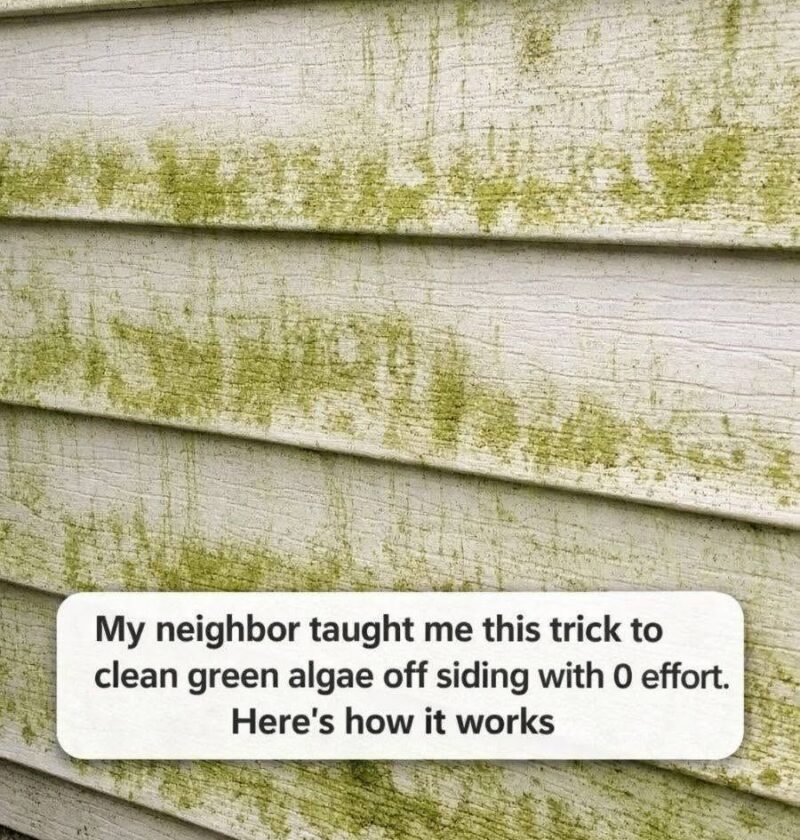
That headline is doing the usual “0 effort miracle trick” exaggeration. Green algae on siding is real and common, but there’s no true zero-effort method that safely removes it and keeps it gone.
What’s actually going on in most of these posts is one of a few basic cleaning methods being rebranded as a “secret hack.”
🌿 What the “trick” usually is
Most viral versions are talking about:
- Vinegar diluted with water
- diluted bleach solution (not vinegar, despite confusion online)
- or a commercial siding cleaner sprayed and left to work
They’re presented as “spray and forget,” but that’s misleading.
🧼 What really happens
- The solution may kill surface algae
- Dirt and dead algae still often need rinsing or light scrubbing
- If left too long or used incorrectly, it can damage plants or siding finish
So it’s more like:
“low effort cleaning with chemical help,” not “no effort at all.”
🏠 Safer real methods
- Soft wash method: low-pressure spray + cleaning solution + rinse
- Mild soap + water + brush for light buildup
- Commercial siding cleaners designed for algae/mold removal
- Prevent regrowth by improving sunlight and airflow
⚠️ What to avoid
- High-pressure washing on vinyl or wood siding (can cause damage)
- Mixing chemicals like bleach and vinegar (can create toxic gas)
- Leaving strong solutions on plants or soil nearby
🧠 Why algae comes back
Green algae grows because of:
- moisture
- shade
- organic buildup on surfaces
So even after cleaning, it returns unless conditions change.
✔️ Bottom line
There is no true “zero-effort neighbor secret.” The real solution is basic cleaning + prevention, not a miracle ingredient.
If you tell me what kind of siding you have (vinyl, brick, wood, cement), I can give you the safest and most effective method for that specific surface.