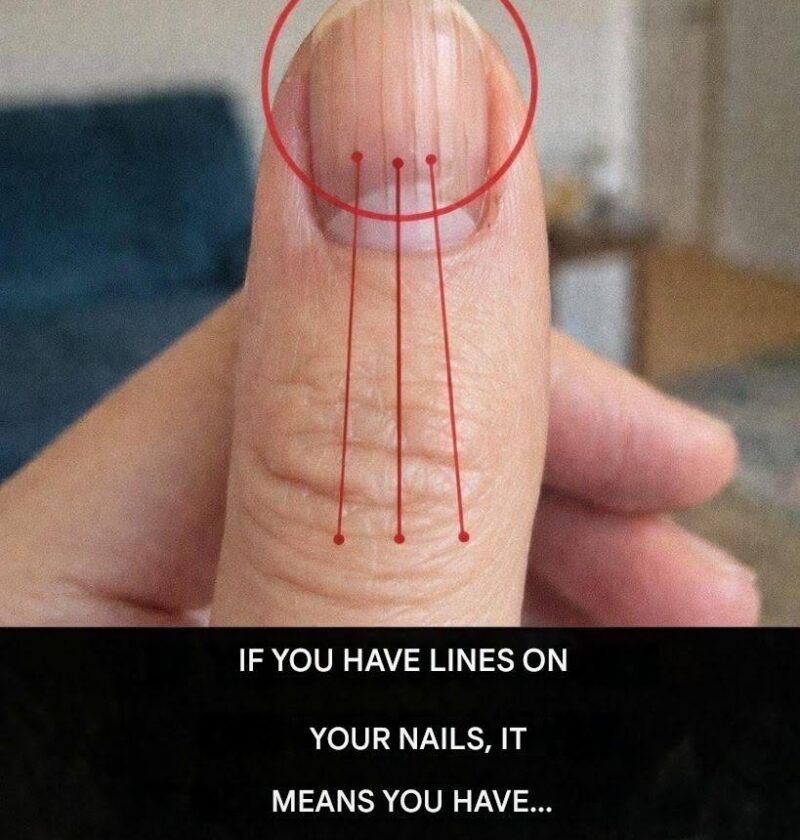
The claim “Nail Lines: What They Can Reveal About Your Health” is partly true but often exaggerated. Nail changes can sometimes provide clues about health, but most nail lines are harmless and not a reliable way to diagnose disease on their own.
Common types of nail lines and what they may mean:
- Vertical ridges (running from cuticle to tip): Very common, especially with aging, and often normal. They can also be related to dry nails.
- Horizontal grooves (Beau’s lines): Can appear after a temporary interruption in nail growth, such as illness, injury, severe stress on the body, or certain treatments. The cause depends on the timing and other symptoms.
- White lines or spots: Often due to minor nail injury; they usually do not indicate a vitamin deficiency.
- Dark streaks under a nail: Can have harmless causes, but a new, changing, or widening dark band should be evaluated because, rarely, it can be related to skin cancer under the nail.
- Spoon-shaped nails (koilonychia): May be associated with iron deficiency or other conditions, though not always.
- Nail separation, thickening, or unusual color changes: Can occur with infections, skin conditions, medications, or other health issues.
Consider seeing a healthcare professional if you notice:
- A sudden, unexplained nail change
- A dark streak that is new or changing
- Multiple nails changing at once
- Nail changes along with symptoms like fatigue, weight loss, pain, or skin changes
Bottom line: Your nails can sometimes reflect what is happening in your body, but they are only one piece of the picture. A diagnosis should be based on a full medical evaluation, not nail appearance alone.