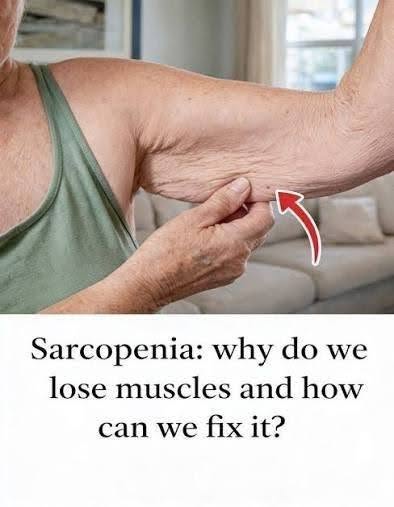
Sarcopenia is the gradual loss of muscle mass, strength, and function that happens with aging. It’s one of the main reasons older adults feel weaker, slower, or less stable on their feet—but it’s not inevitable or uncontrollable.
What causes sarcopenia?
1. Aging changes in muscle
After about age 30–40, the body slowly starts losing muscle unless it’s actively maintained. This speeds up after age 60.
2. Low physical activity
Muscles weaken quickly when they’re not used regularly. A sedentary lifestyle is one of the strongest drivers.
3. Low protein intake
Older adults often don’t eat enough protein to maintain or rebuild muscle.
4. Hormonal changes
Lower levels of hormones like testosterone, growth hormone, and estrogen affect muscle repair and growth.
5. Chronic inflammation or disease
Conditions like diabetes, heart disease, kidney disease, or long-term inflammation can accelerate muscle loss.
6. Poor nutrient status
Deficiencies in vitamin D, B12, or overall calories can contribute to weakness and fatigue.
Symptoms of sarcopenia
- Weak grip strength
- Trouble standing from a chair
- Slower walking speed
- Frequent falls or poor balance
- Loss of muscle tone or visible thinning of limbs
Evidence-based solutions
1. Resistance training (most important)
Muscle responds to stress at any age.
- Chair stands, wall push-ups, light weights, resistance bands
- 2–3 times per week is effective
2. Adequate protein intake
- Aim for protein with each meal (eggs, fish, chicken, lentils, dairy)
- Older adults often need more than they think
3. Vitamin D and overall nutrition
- Correct deficiency if present
- Ensure enough calories and balanced diet
4. Daily movement
- Walking, stair climbing, light household activity
- Avoid long periods of sitting
5. Treat underlying conditions
- Diabetes control
- Thyroid issues
- Chronic inflammation or medication side effects
6. Physical therapy (if needed)
- Especially helpful after falls, injury, or advanced weakness
Key truth
Sarcopenia is not just “normal aging” that must be accepted. It is largely preventable and partially reversible, especially with strength training and nutrition.
If you want, I can give you a simple 10-minute daily routine for seniors to rebuild leg strength safely.