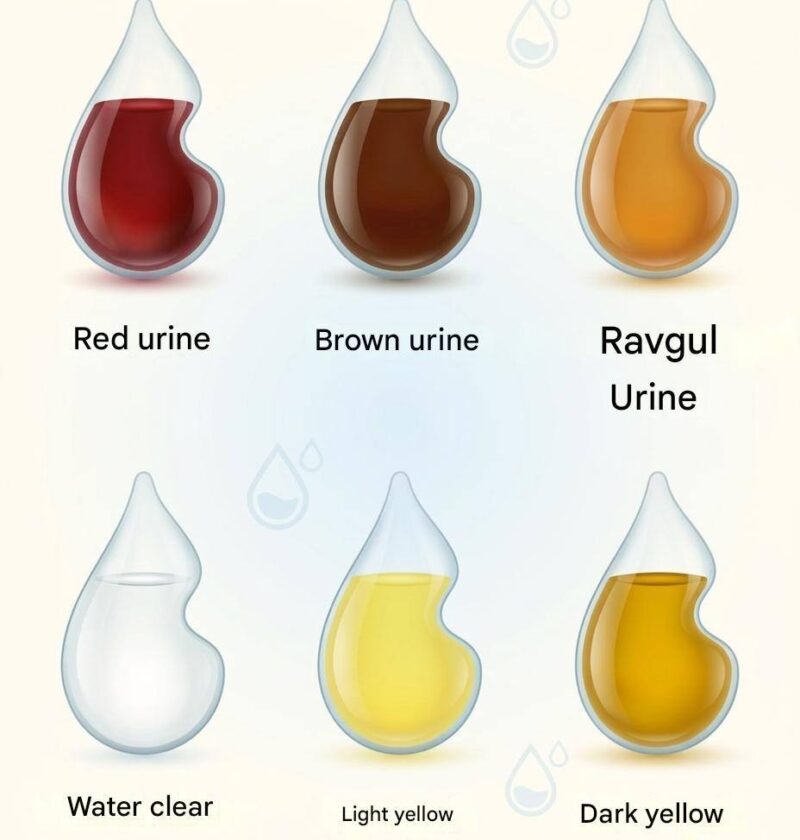
Urine color can provide useful clues about hydration, diet, medications, and sometimes health conditions—but it’s not a diagnosis by itself.
🚰 Pale yellow to light straw
This is generally considered the normal, healthy range.
- Usually indicates adequate hydration.
💧 Completely clear
- May mean you’re drinking a lot of fluids.
- Not usually harmful, but consistently crystal-clear urine can suggest overhydration.
🟡 Dark yellow or amber
- Often a sign of dehydration.
- Try increasing fluid intake unless a healthcare professional has advised fluid restriction.
🟠 Orange
Can be caused by:
- dehydration
- certain medications
- high intake of foods rich in beta-carotene
If persistent, it should be evaluated.
🩷 Pink or red
May be due to:
- foods such as beets or berries
- blood in the urine
Blood in the urine should be assessed by a healthcare professional, even if it occurs only once.
🟤 Brown or cola-colored
Can sometimes result from:
- severe dehydration
- certain medications
- liver problems
- muscle breakdown in rare cases
Medical evaluation is recommended.
🟢 Green or blue
Less common causes include:
- certain medications
- food dyes
- some infections
Persistent unusual colors should be checked.
☁️ Cloudy urine
May be associated with:
- dehydration
- crystals in the urine
- urinary tract infections
Especially important to assess if accompanied by pain, fever, or burning during urination.
🚩 When to seek medical advice
Contact a healthcare professional if you notice:
- blood or red urine not clearly explained by food
- persistent dark brown urine
- pain or burning when urinating
- fever with urinary symptoms
- significant changes that don’t resolve
Bottom line
For most people, pale yellow urine is a good sign of hydration. Darker urine often suggests you need more fluids, while red, brown, or persistently unusual colors can sometimes indicate a medical issue and deserve attention.