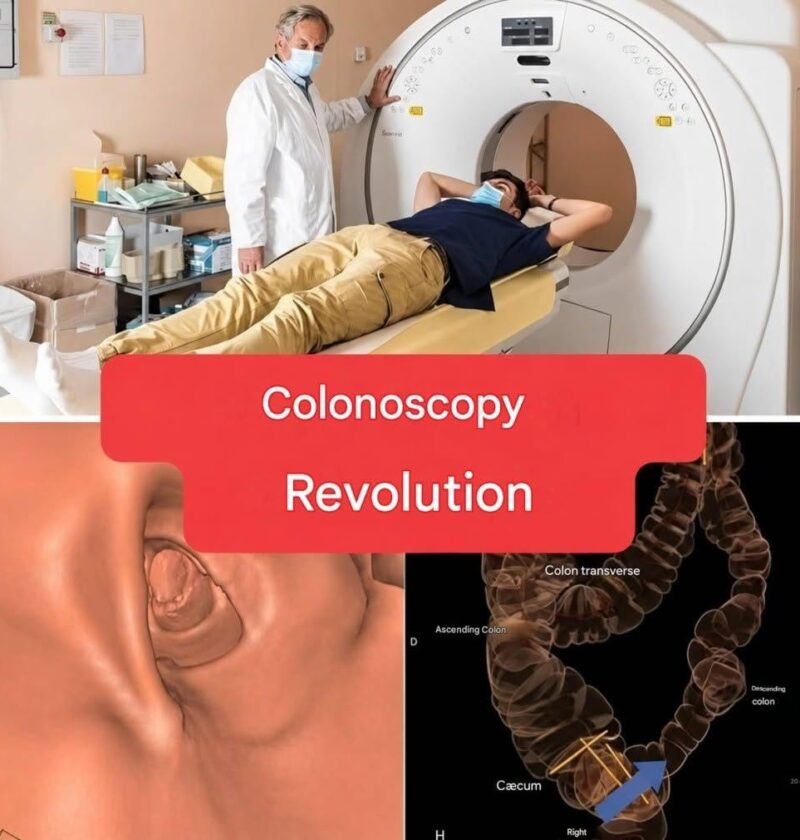
If you’re referring to claims that a new method will replace traditional colonoscopy with a non-invasive test, the reality is more nuanced. Researchers are developing and improving less invasive ways to screen for colorectal cancer, but traditional colonoscopy remains an important diagnostic tool and has not been eliminated.
Newer, less invasive colon screening methods
- Stool-based tests
- Tests such as fecal immunochemical testing (FIT) and stool DNA tests look for hidden blood or cancer-related changes in stool.
- They do not require bowel insertion or sedation.
- If results are abnormal, a follow-up colonoscopy is usually needed.
- CT colonography (“virtual colonoscopy”)
- Uses a CT scan to create images of the colon.
- It avoids inserting a camera through the entire colon but still requires bowel preparation.
- If polyps are found, a traditional colonoscopy may be needed for removal.
- Blood-based and molecular tests
- Scientists are studying blood markers and genetic signals that may help detect colorectal cancer earlier.
- These approaches are promising but are not yet a complete replacement for colonoscopy.
Why colonoscopy is still used
A colonoscopy can:
- Detect precancerous polyps.
- Remove polyps during the same procedure.
- Investigate symptoms such as unexplained bleeding or changes in bowel habits.
The future of screening
The goal is to make colorectal cancer screening easier, more comfortable, and accessible. New technologies may reduce the number of people who need invasive procedures, but for now, colonoscopy remains one of the most effective methods for detecting and preventing colorectal cancer.
If you have a specific “new method” in mind (for example, a pill camera, AI scan, blood test, or a particular news claim), share the details and I can explain how it works and whether it is available.