Let’s break it down clearly and accurately.
🩺 First: What gallbladder surgery actually is
Gallbladder removal (cholecystectomy) is usually done when someone has:
- Gallstones causing pain
- Gallbladder inflammation (cholecystitis)
- Blocked bile ducts
- Repeated biliary attacks
It’s one of the most common and safest surgeries worldwide.
👉 In most cases, not removing a diseased gallbladder is more dangerous than removing it.
⚠️ So what conditions can happen after removal?
Most people recover completely, but a small percentage may experience some long-term digestive changes.
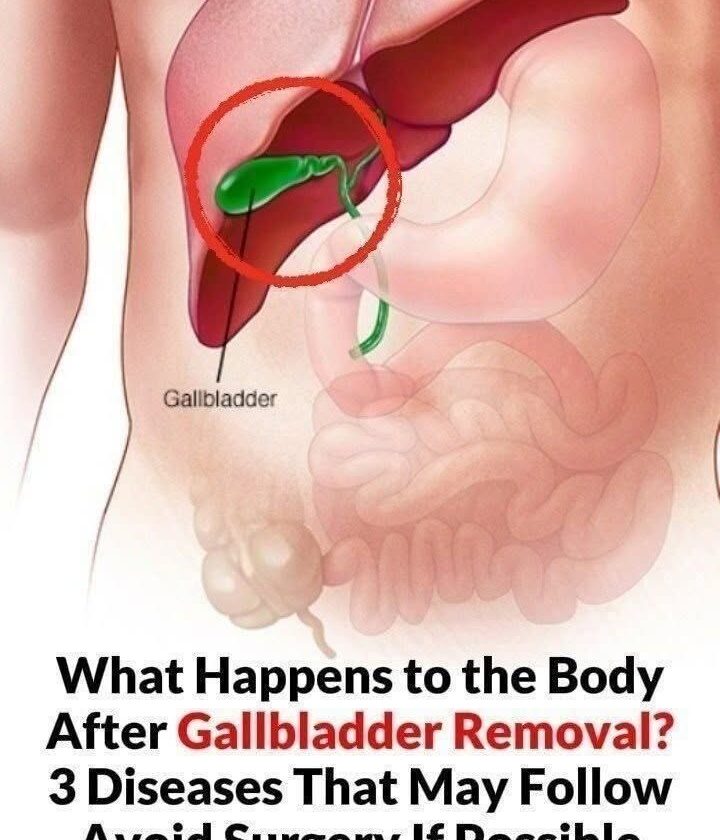
Here are the 3 commonly discussed post-surgery issues:
1. 💩 Post-cholecystectomy diarrhea
Some people get:
- Loose stools
- Urgency after fatty meals
Why it happens:
- Bile now flows continuously into the intestine instead of being stored
- Fat digestion becomes less controlled
Reality:
- Usually mild and improves over time
- Managed with diet (low-fat meals)
2. 🌿 Bile reflux or gastritis-like symptoms
Some patients may feel:
- Burning in stomach
- Bloating
- Nausea
Why:
- Bile can sometimes flow backward into the stomach
Reality:
- Not common
- Often manageable with medication and diet changes
3. 🧠 “Post-cholecystectomy syndrome”
This is a broad term, not one disease.
Symptoms may include:
- Persistent abdominal discomfort
- Gas or bloating
- Food intolerance
Why:
- Could be due to leftover stones, bile duct issues, or unrelated digestive problems
Reality:
- Only a minority of patients experience this
- Many cases are treatable once properly diagnosed
🚨 Important truth: risk vs benefit
The claim “you should avoid surgery if possible” is not medically correct in all cases.
Because untreated gallbladder disease can cause:
- Severe infection
- Pancreatitis (life-threatening inflammation)
- Blocked bile ducts
- Emergency surgery risk
👉 Elective gallbladder removal is often safer than waiting for complications.
🧠 What actually matters before surgery
Doctors consider:
- Frequency of pain attacks
- Size and number of gallstones
- Infection or inflammation
- Overall health
If symptoms are mild, sometimes:
- Diet control is tried first
But if complications exist: - Surgery is the safest option
🥗 Life after gallbladder removal (real picture)
Most people:
- Eat normally after recovery
- Have no long-term issues
- Live completely normal lives
A small percentage need:
- Low-fat diet adjustments
- Temporary digestive support
❗ Bottom line
- Gallbladder removal is not something to fear unnecessarily
- The “3 conditions” are possible but not common or severe in most patients
- For many people, surgery actually prevents serious complications
If you want, I can explain:
- How to avoid gallbladder surgery naturally (when it’s safe)
- Diet tips for gallstones
- Or signs that surgery is urgently needed