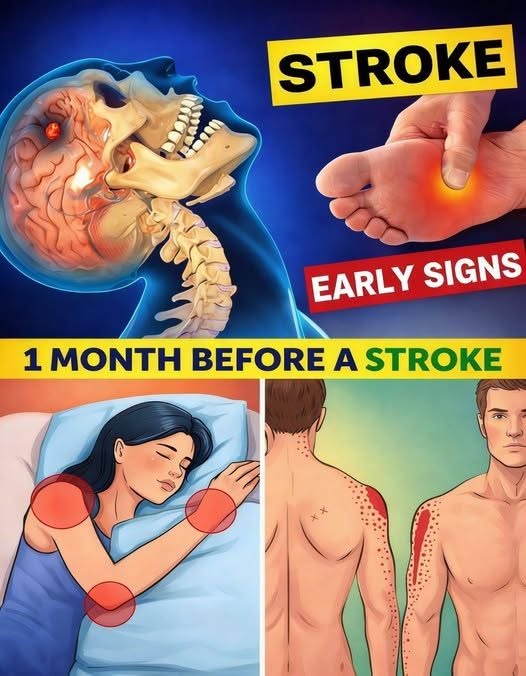
If you’re asking about the claim “8 warning signs of stroke that may appear one month before”, it’s important to clarify: there is no reliable list of symptoms that can predict a stroke exactly one month in advance. However, some people experience warning signs before a stroke, especially transient ischemic attacks (TIAs), sometimes called “mini-strokes.” TIAs can happen hours, days, or occasionally weeks before a major stroke and should be treated as a medical emergency.
8 Possible Warning Signs That Should Not Be Ignored
- Sudden weakness or numbness
- Especially on one side of the face, arm, or leg.
- Trouble speaking or understanding speech
- Slurred speech, confusion, or difficulty finding words.
- Sudden vision problems
- Blurred vision, loss of vision in one eye, or double vision.
- Dizziness or loss of balance
- Unexplained difficulty walking, coordination problems, or feeling faint.
- A sudden severe headache
- Especially a “worst headache ever” or a headache with neurological symptoms.
- Facial drooping
- One side of the face may feel weak or appear uneven when smiling.
- Temporary symptoms that disappear
- Symptoms that last minutes and then resolve may indicate a TIA.
- New confusion or difficulty performing familiar tasks
- Sudden changes in memory, thinking, or awareness.
Remember FAST:
- F — Face: Is one side drooping?
- A — Arms: Can both arms be raised?
- S — Speech: Is speech unclear?
- T — Time: Call emergency services immediately if these occur.
9 Tips to Help Prevent Stroke
- Control blood pressure
- High blood pressure is one of the strongest stroke risk factors.
- Stop smoking and avoid tobacco
- Smoking damages blood vessels and increases clot risk.
- Exercise regularly
- Aim for regular moderate activity, such as brisk walking, unless your doctor advises otherwise.
- Eat a heart-healthy diet
- Focus on vegetables, fruits, whole grains, lean proteins, and healthy fats.
- Limit excess salt, processed foods, and added sugars.
- Manage cholesterol levels
- High LDL (“bad”) cholesterol can contribute to artery blockage.
- Control diabetes
- Keep blood sugar levels within a healthy range with medical guidance.
- Maintain a healthy weight
- Reducing excess body weight can lower blood pressure and improve heart health.
- Limit alcohol intake
- Excess alcohol can raise blood pressure and stroke risk.
- Get regular health check-ups
- Monitor blood pressure, cholesterol, heart rhythm, and other risk factors.
If you or someone nearby develops sudden face drooping, arm weakness, speech difficulty, severe headache, or loss of coordination, seek emergency medical help immediately—even if the symptoms improve.